
I did an internship with Hexicosa Inc during summer 2026 to help develop Buzzworks, a Unity game where you play as a robot bee designed to harvest nectar and research your environment.
I was the lead programmer and built many of the systems seen in the game such as:
Voxel A* Pathfinding the worker bees use to navigate.
Hexagonal building system that allows the player to make complex base layouts.
Player movement including a surface and camera relative wall climbing system.
I also helped with 3D modeling, rigging, and texturing several machines the player interacts with.
Building
The building system in Buzzworks allows for full hexagonal grid snapping at any angle the player wants, allowing the player to essentially build a fully snapping base in any vertical or horizontal direction. Larger hexagonal grids allow the player to place larger buildings that allow them to better research their environment.
Because perfect hexagonal spheres are not possible, the player needs to be able to swap between angle modes, allowing them to change whether they want to angle their platform relative to neighboring platforms, or to instead use a globally agreed upon direction to spiral platforms around, letting you create perfect tubes of hexagonal pieces.
Movement
The movement in Buzzworks is unique in the sense that the transition between flying and crawling needed to feel seamless and intuitive.
The crawling system allows the player to dynamically crawl on any surface and automatically solve the player’s desired movement using information from the surface they are standing on and information from the camera.
When crawling, the player essentially acts as a car with soft suspension by effectively reducing the resolution of the surface the player is crawling on to improve transitions on sharp angles. By probing ahead of the player’s desired input direction, we can further improve movement feel to create an easy to understand player controller.
Pathfinding
In Buzzworks, the player can create worker bees that automate certain tasks around the base. Because the game has a complex building mechanic that allows the player to make unique structures, the bees needed a way to navigate through said unique structures as well as the rest of the environment. Using a less precise but faster version of a Voxel A* pathfinding algorithm, the player can have dozens of bees navigating the world while staying well above target framerates.
The voxel grid is not pre-baked, and can dynamically adapt to any new platforms the player places by clearing pathfinding cache of any bees near a recently placed platform.
my programming pipeline for buzzworks
What does my designer need from this system I’m going to give them? What existing systems can I leverage to make their lives easier?
Let’s say my designer comes up to me and asks:
“Hey Jackson, we need a cutscene manager where our designers can easily activate and reference cutscenes scene-wide.”
I’d then move onto the next step
Establish the designer’s desires
lIST EXPECTED PROBLEMS + Complexity
What problems will we encounter? Will any problems come from previously implemented systems?
I find that in game development, most technical problems I encounter are ill structured; they don’t have clear solutions.
So asking myself what issues I expect to run into and conveying that to my team is a crucial part of my system implementation pipeline.
For our cutscene manager example, I’d likely find that:
Scene references in Unity for playable directors are a possible point of error since a global manager can’t hold these references directly.
If my designer wants UI and movement to be disabled during cutscenes, I’d need to first confirm that our UI and movement can be easily disabled.
We must ensure that cutscenes cannot overlap if two are triggered simultaneously.
How can we ensure that this system is designer friendly, modular, and can be completed within a given timeframe?
Listing pros and cons of each solution also helps everyone on the team pick which system would best serve our desired implementation.
Some possible implementations of our cutscene manager with pros and cons could be:
String ID Dictionary: Designers could put IDs into data files, but this is highly prone to human error.
Enum dictionary with keys to playable directors: Compile time safety and a clean dropdown in the Unity inspector. But a programmer would need to edit code to implement a new cutscene.
Registration pattern using scriptable objects as keys in a dictionary that builds playable director references at runtime: Designers would simply need to create scriptable object assets and add them to the cutscene manager. Renaming doesn’t break references. This would be my choice.
Compile possible solutions
Now that we have our solutions, we implement the system that best serves our desired implementation, while also being open minded and willing to use elements from other solutions (or pivoting entirely when one solution is not sufficient).
One very important programming philosophy I live by is always keep my team and designers in the loop on what stage of implementation I’m on.
They need to know if I’m struggling, need help identifying solutions, or if I’m not adhering to the designer’s requests.
Showing them my work as often as possible helps identify issues that I missed and prevents us from feeling the consequences later in development.
Lastly, I’m fully able to work with other programmers’ design philosophies. I put my pipeline here as a showcase of my ability to think critically about a given software problem.
Implement
some art i made for buzzworks
I modeled, textured, rigged, and animated these buildings
Island Suspender
Design requirements: nature-like machinery that looks approachable and non-encroaching on its environment
I intended this design to mimic three different things: the petals on flowers, the leaves of whirly seed pods, and blades of vertical wind turbines.



Research station
Design requirements: Take a kid’s toy and create a machine based on that toy that looks like it’s being inquisitive about the item it’s researching.
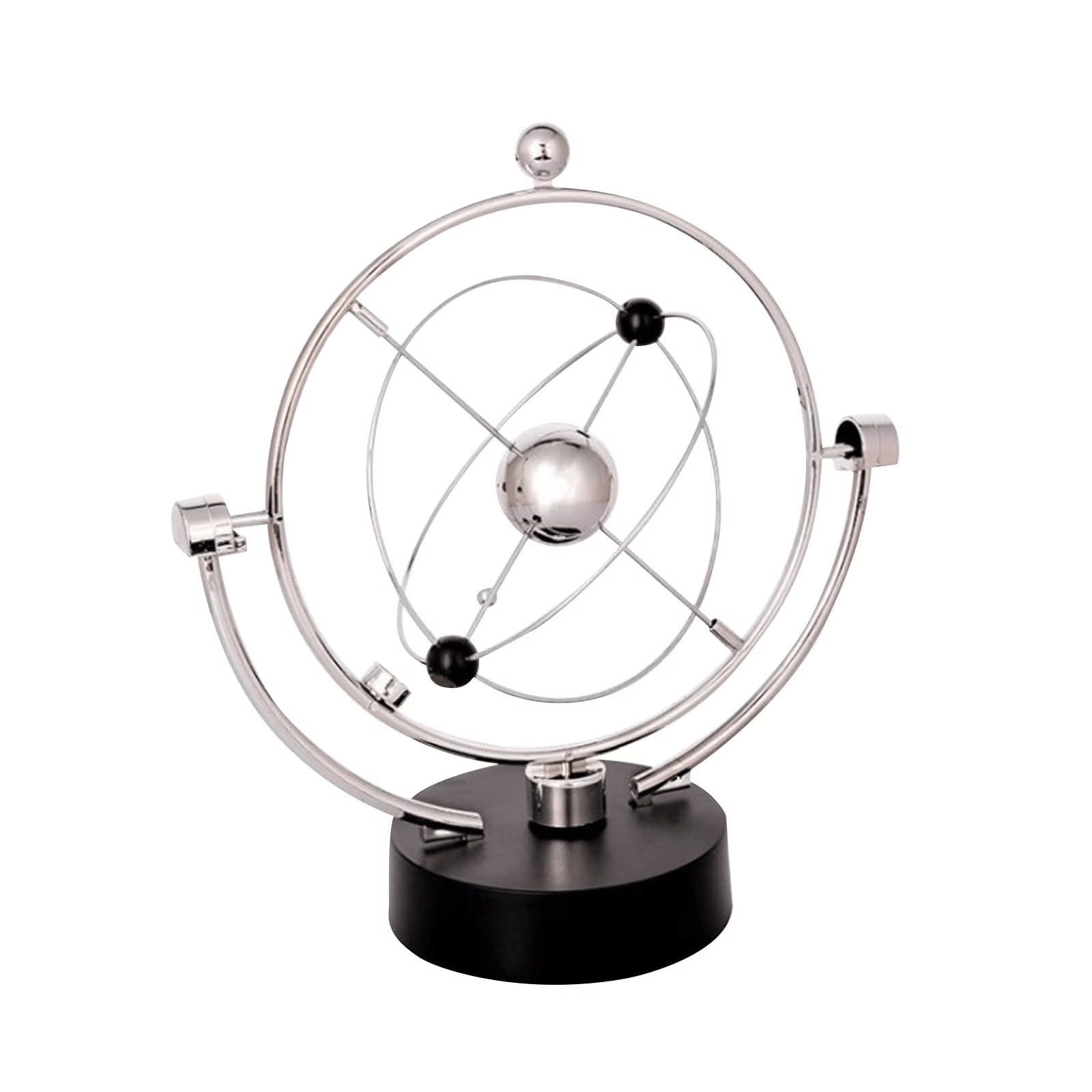
I’ve always thought that Newton’s cradles had a certain curiosity to them, so I picked a solar system cradle and designed the research station around its swinging rings.